M.Robles Ustariz1, L. Lizarazo Rodríguez1, A. Agramont Akiyama1
- Vrije Universiteit Brussels
This post follows earlier Biodiversa+ Defend-Bio reflections on what Nature-based Solution (NbS) projects are, how are these categorised, and what typology can fit under these categories. Furthermore, we reflect on how NBS can trigger socio-environmental conflicts when they fail to implement human rights safeguards into their governance (see the blogposts here). Through the case study of the Amazon Basin Project (ABP), we investigate how a multilevel governance system is organised for the categorisation, design and implementation of NbS. Aligned with (Nelson et al., 2020; Seddon et al., 2021; Tallent & Zabala, 2024), our reflections confirm that NbS require attention in terms of their participatory architecture, and how they are designed, implemented and monitored. Furthermore, we emphasise the importance of meaningful participation and access to benefit-sharing of the communities in whose territories NBS are implemented.
We examine this question through the case of the Amazon Basin Project (ABP). The ABP has the objective to materialise and implement the Strategic Action Programme (SAP), formulated by the Amazon Cooperation Treaty Organisation (ACTO), intersecting climate adaptation strategies for integrated water resource management within a transboundary ecosystem reality through eight different jurisdictions sharing the Amazon Basin. For its objective, the ABP’s portfolio includes sixteen interventions, of which four are categorised as NbS. This makes it a relevant case for analysing participation through the rights of the communities living in the territories where NbS projects are planned and developed.
NbS are not just purely technical measures. How they are defined, categorised and implemented is shaped by the governance processes that determine whose knowledge counts and who participates when creating the measures. Therefore, examining those governance processes is essential. These processes operate within different frameworks of rights, yet less attention has been paid to the legal framework against which their legitimacy should be assessed. The gap we found when analysing the ABP’s NbS interventions combines these two disciplines: governance and law.
Our analysis started with an environmental science governance approach, examining whether and how whether and how communities have been taking part in creating and implementing the NbS interventions under the ABP. Nevertheless, although essential, we perceived that this approach by itself was not enough to connect the environmental and participatory rights we have been identifying across the jurisdictions sharing the Amazon Basin. An environmental democracy lens complements the governance approach by bringing law into the NbS design and management, essential for achieving participatory governance in the NbS architecture.
With this post we want to share where our research stands, open a space for sharing and discussing ideas around NbS, and announce where the work will be discussed next. The paper we are working about the Amazon Basin Project and its NbS interventions was presented at the 17th Nordic Environmental Social Science (NESS) Conference hosted by Uppsala University in Sweden, 9-11 June 2026, Workshop 11 Co-creating nature-based solutions: Bridging policy, practice, and participation, where we received positive feedback on the role of lawyers in these processes, which are governed more from an environmental science perspective. A new version of the paper will be presented at the NbS International Congress 2026: Shaping a resilient future with people and natura through knowledge and action, in November, on the Scientific Conference Session 6: Socioecological Justice in scaling Nature-based Solutions.
This work is part of our area of work in the Defend-Bio team in which we are also mapping how biosphere defenders[1] and courts are engaging with NbS across the main cross-border Latin American ecosystems. From challenging specific projects and interventions under this category, to exploring new approaches to it, we want to find out how biosphere defenders, courts, and law are engaging with the environmental interventions called NbS . This will shed light on how NbS are being implemented in the Amazon basin.
We welcome comments, questions and exchange of ideas. For further information about the paper on the Amazon Basin Project and its NbS, please contact the corresponding authors, M.I.Robles Ustariz, L.Lizarazo Rodríguez and A. Agramont Akiyama.
[1] Biosphere defenders broaden the concept of environmental defenders including the view of humans as part of Earth’s biosphere. Biosphere defenders implement different tools to defend their territories while at the same time present or generate different ways to interact with nature. You can read more about it in Biosphere Defenders Leveraging the Human Right to Healthy Environment for Transformative Change by Claudia Ituarte-Lima.
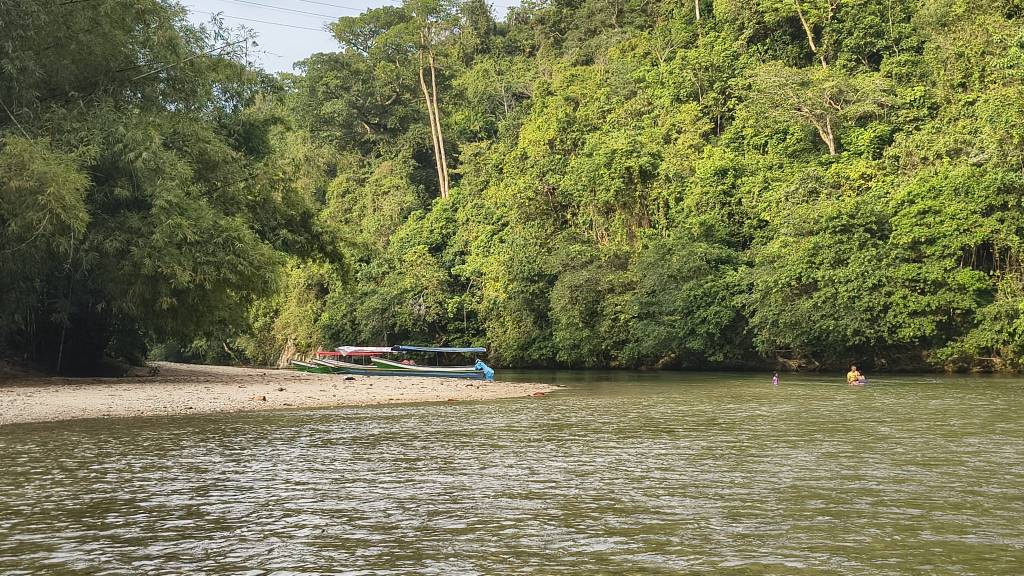
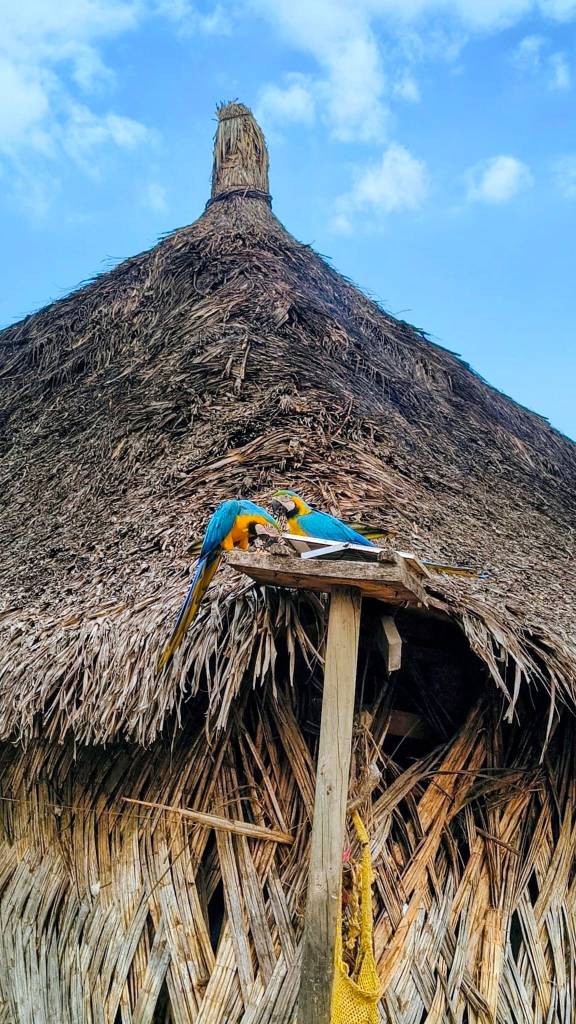
Photos: M.I.Robles Ustariz, Defend-Bio team
This research was funded by Biodiversa+, the European Biodiversity Partnership, in the context of the DEFEND-BIO project under the 2023–2024 BiodivNBS joint call. It was co-funded by the European Commission and the following funding organisations: Swedish Research Council for Environment, Agricultural Sciences and Spatial Planning (Formas), Innovation Fund Denmark (IFD), Research Foundation – Flanders (FWO), Swiss National Science Foundation (SNSF), and Dutch Research Council (NWO).

