Also vailable in Spanish and Portuguese.
Martha Isabel Robles Ustariz (1)
- PhD Researcher, Biodiversa+, Defend-Bio Project. Brussels School of Governance (BSoG), Vrije Universiteit Brussel (VUB)

There is no doubt: humanity’s future depends on rethinking its relationship with nature. Seven of the nine planetary boundaries have been transgressed endangering and pushing closer to a red zone Earth’s stability, life support systems and resilience processes (Sakschewski et al., 2025; Richardson et al., 2023). The urge to shift to a deeper understanding of humans as part of nature, interconnected and dependent on it is now more urgent than ever.
One of the ‘‘new’’ concepts leading this shift is Nature-Based Solutions (NBS). Since it is first mentioned by the World Bank in 2008, NBS has grown into a central idea in environmental policy and research. Highly promoted as an innovative way to reduce greenhouse gas emissions (GHG), restore ecosystems, and strengthen resilience to climate change (Hickey et al., 2008; IFRC & WWF, 2022; Streck et al., 2022) (Cohen-Shacham et al., 2016; Pena-Neira, 2023; Matandirotya et al., 2025), it carries a hopeful promise: humanity can work with nature for the well-being of both (Hickey et al., 2008; IFRC & WWF, 2022) (Cohen-Shacham et al., 2016; Johnson et al., 2022; Terton & Davis, 2022). Yet, behind the concept and its vision, tensions and debates about what an NBS really means have been shaping its conceptualisation and implementation.
i. One idea, many definitions.
While the idea of protecting, conserving, restoring, and managing ecosystems for human and ecological well-being is not new, the NBS concept is relatively recent. Its roots can be traced back to the Ecosystem Approach adopted by the Convention on Biological Diversity in 1992, a framework that emphasised the interdependence between people and ecosystems (Cohen-Shacham et al., 2016; Faivre et al., 2017; Da Silva & Ribeiro, 2023).
In 2008 the World Bank first mentioned the term NBS in a portfolio review of its biodiversity projects. Though not formally defined, the idea was clear: protecting natural ecosystems through a sustainable management of biological resources has social, economic and environmental benefits (Hickey et al., 2008).
In 2012, the International Union for Conservation of Nature (IUCN) published The IUCN Programme 2013–2016, reflecting its vision of a just world that values and conserves nature by its own sake and for sustainable development. The message behind it was evident: global production and consumption patterns are destroying nature- humanity’s life support system-, yet within nature itself there is a powerful and overlooked source of solutions. By unlocking this potential, nature can offer effective responses to address global challenges. In that way, the IUCN envisioned NBS and its Resolution 069-2016 provided the first global definition ‘‘[NBS are] actions to protect, sustainably use, manage and restore natural or modified ecosystems, which address societal challenges, effectively and adaptively, providing human well-being and biodiversity benefits’’ with the goal ‘‘to support the achievement of society’s development goals and safeguard human well-being in ways that reflect cultural and societal values and enhance the resilience of ecosystems, their capacity for renewal and the provision of services; (…).’’
In parallel, the European Commission (EC) also conceptualised NBS. In the Final Report of the Horizon 2020 Expert Group on ‘Nature-Based Solutions and Re-Naturing Cities’, NBS were described as ‘‘[…] actions inspired by, supported by or copied from nature; both using and enhancing existing solutions to challenges, as well as exploring novel solutions (…).’’The EU highlights nature’s own features and complex systems to achieve outcomes like reducing disaster risk, improving human well-being and socially inclusive green growth, and the necessity of maintaining and enhancing natural capital, as the basis for solutions. Unlike the IUCN’s conservation-centred vision, as the report explicitly acknowledges, the EC’s promotion of NBS was strongly influenced by business interests and the ambition to position Europe as a global leader in NBS research and markets. (European Commission. Directorate General for Research and Innovation, 2015).
In 2022, the United Nations Environment Assembly (UNEA) of the United Nations Environment Programme (UNEP), (see Resolution 5/5 of 2022, Nature-based solutions for supporting sustainable development) adopted the first multilaterally agreed definition on NBS, cementing it as a key instrument to tackle the planetary crisis. Recognising the interdependence of human well-being and healthy ecosystems, and the scaling up of NBS as a way to achieve the Sustainable Development Goals (SDG), UNEA defined NBS as “actions to protect, conserve, restore, sustainably use and manage natural or modified terrestrial, freshwater, coastal and marine ecosystems which address social, economic and environmental challenges effectively and adaptively, while simultaneously providing human well-being, ecosystem services, resilience and biodiversity benefits”.
Yet, despite this growing institutional consensus about how beneficial NBS are to advance sustainable development, several questions about the concept and its implementation remain unresolved. Next section explores some of the current debates.
ii. How open is too open: what is not an NBS?
Many scholars have described NBS as an umbrella concept covering a range of actions that use nature to solve socio-ecological challenges while improving human-well-being and biodiversity (Nesshöver et al., 2017; Dorst et al., 2019; Sowińska- Świerkosz et al., 2022; Johnson et al., 2022; Terton & Davis, 2022; Johnstone, 2024; Lemos et al., 2024). Under this umbrella falls everything from ecosystem restoration approaches and issue-specific ecosystem related approaches to infrastructure-related measures, ecosystem-based management approaches, as well as ecosystem protection measures (Cohen-Shacham et al., 2016; Anderson & Gough, 2022; Lemos et al., 2025).
Supporters argue that this flexibility is a strength. By avoiding rigid categories, the concept is able to reflect and to include the ongoing evolution of scientific developments (Dorst et al., 2019; Terton & Davis, 2022; Catalano et al., 2021), as well as to bridge disciplines that traditionally are not interconnected (Dorst et al., 2019). NBS also interact and reflect different cultural values and knowledges (Sowińska-Świerkosz & García, 2022). This includes, for instance, the integration of Indigenous People and Local Communities (IPLCs) understandings and their relationships with nature (Pedersen et al., 2025).
But, if NBS can include almost any action that brings together different disciplines and forms of knowledge to tackle societal challenges while supporting biodiversity, then, what is not an NBS? To address this question, the IUCN provides an institutional guide, the IUCN Global Standard for NBS (Global Standard). Academia provides also the exclusion criterion (Sowińska-Świerkosz & García, 2022) consisting of ‘‘hard’’ characteristics -to not view any action as an NBS- and ‘‘soft’’ characteristics -related to effective and efficient NBS. The Global Standard provides a comprehensive standard for NBS implementation and effectiveness, while the second one focuses more on the conceptual boundaries, providing a frame. Both being necessary to qualify an action as an effective NBS.

The Global Standard consists of 8 criteria (with 27 indicators) to guide the design and implementation but also to legitimise their implementation among societies. The Standard searches for measures to respond to socio-ecological problems, such as climate change or biodiversity loss (Criterion 1), to protect biodiversity and enhance ecosystem integrity (Criterion 3) by recognising the understanding and integrating the socio-ecological systems in which they will be implemented (Criterion 2). The measures should also be economically viable (Criterion 4), integrate people and governance in an inclusive, transparent and empowering way (Criterion 5). They should manage trade-offs (Criterion 6) and remain adaptive over time (Criterion 7 and 8).
While the Standard presents broad criteria for guiding legitimate NBS, in practice it does not fully resolve what is an NBS and its boundaries are not fully clear. To address this, and building on the Standard, Sowińska-Świerkosz & García, 2022 propose the exclusion criterion to better exclude what is not.
- NBS are actions not only inspired by nature but dependent on the functioning of ecosystems (Criterion 3 Global Standard: Net gain for biodiversity and ecosystem integrity). For example, wetland restoration reduces flooding through natural water retention, and coastal mangroves protect from storms through their dense root systems. In both cases, the effectiveness of the solution comes directly from the proper functioning of the ecosystems. Then, despite that renewable energy projects solve societal challenges and could have a positive impact on biodiversity (in some scenarios), they would not classify as an NBS because they do not depend on ecosystem functioning.
- The solutions provided by NBS must respond to a societal and ecological problem of today and, at the same time, necessarily, ‘‘maintain or enhance biodiversity’’ (Criterion 1 Global Standard: Address societal challenges; Criterion 3 Global Standard: Net biodiversity gain). Rain gardens, for instance, manage stormwater, enhance climate resilience and support urban biodiversity. On the contrary, historical or ornamental parks would not fit into this category.
- When compared to grey infrastructure, an NBS must generate benefits that grey solutions cannot offer on their own (Criterion 4 Global Standard: Economic feasibility and added value). A green roof/wall infrastructure, for example, qualifies as an NBS only if it offers community and biodiversity benefits, beyond what conventional roof provides. Green roofs installed to only meet aesthetic or regulatory requirements without enhancing biodiversity or contributing to societal challenges, would not fit under the NBS category. Click here to see a study about green roofs that would not classify as an NBS.
- NBS must ensure a fair distribution of benefits (for humans and biodiversity) and, at the same time, be economically viable and cost-effective (Criterion 4 Global Standard: Economic feasibility; Criterion 6 Global Standard: Balancing trade-offs). This requires necessarily to be aware of how the measure is designed, located, planned, and managed. Fair benefit-sharing depends on these elements being addressed from the very beginning.
- NBS must be context-specific (Criterion 2 Global Standard: Design at scale and context). An NBS must not only recognise the ecosystem characteristics, but also the social and local characteristics of the context in which it will be implemented.
- NBS must ensure the inclusive involvement and participation of all stakeholders (Criterion 5 Global Standard: Inclusive Governance). Transparent decision-making, access to information and active participation are crucial. NBS, then, need to be developed understanding the socio-economic system in which they are implemented.
These criteria are more than checkboxes. By setting clear boundaries, they keep the concept of NBS meaningful, preventing almost any green initiative from sliding under the label and helping to identify greenwashing practices. This problem has been flagged in carbon-offset schemes that promote carbon-removal solutions through the funding or implementation of NBS. Carbon-offset projects may discourage emissions by putting a price on pollution (see the podcast #9: Pricing Pollution: the use of carbon markets in EU climate policy by GreenDeal-NET) as well as by channeling resources to NBS that contribute to reduce emissions and support sustainable development (UN, 2024; Aggarwal, 2025; UNDP, 2025). However, measures under these schemes have been identified as harmful for IPLCs (for instance violating their right to Free, Prior and Informed Consent (FPIC) or consultation or ignoring their land rights), see the Colombian cases of Baka Rokarire, Cotuhé Putumayo Rivers reservation, the Monochoa case, and the investigations by Centro Latinoamericano de Investigación Periodística: Carbono Opaco and Carbono Gris. In addition, carbon-offset projects have been also accused of distracting from the urgent need to reduce fossil-fuel emissions (UNEP, 2019; Probst et al., 2024; DeLuca, 2025). For instance, Global Witness and SOMO have warned that some companies publicly promote new NBS initiatives while simultaneously expanding their oil and gas extraction capacity.
iii. Nature and participation: the legitimation of NBS
Next to the concerns about having clear boundaries to avoid mislabeling and greenwashing or misunderstandings, another complexity appears: the notion of nature. If NBS must be rooted in the understanding of ecosystem functioning, enhancing biodiversity and responding to context-specific socio-ecological challenges, then understanding what nature is and how communities value, use and relate to it becomes crucial (Nesshöver et al., 2017; Mishra et al., 2024). This opens a deeper debate: whose values, whose knowledge, and whose understanding of nature shape what is considered a solution?
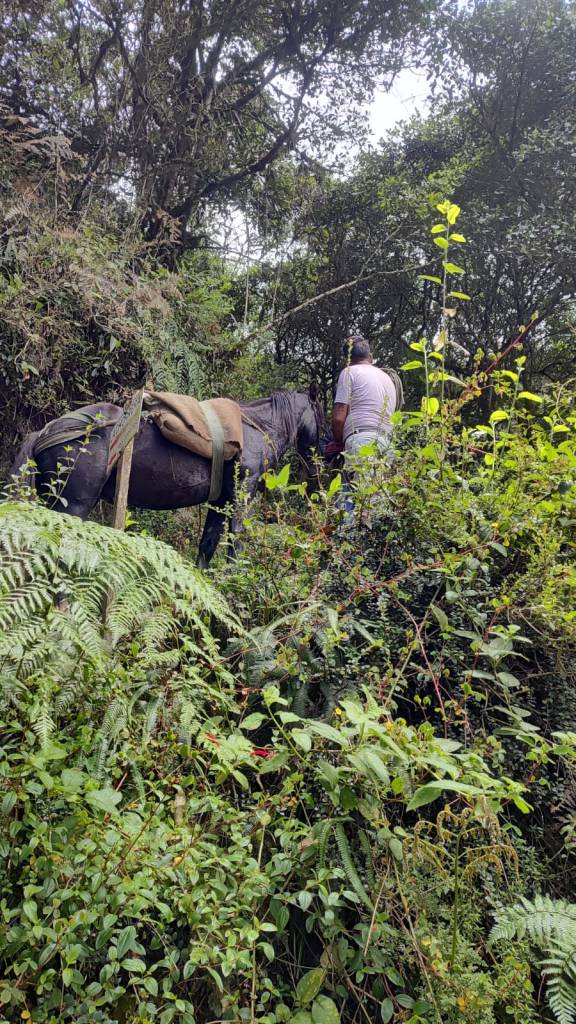
Some scholars and environmental defenders, specially some organisations of IPLCs, warn about the way NBS frame the approach to nature. By reducing it to a mere tool, NBS risk positioning nature as a mere problem-solve device while overselling it’s capacity and shifting -maybe unintentionally- the attention from the structural drivers of today’s current crisis (O’Sullivan et al., 2020). This instrumental view can also lead to valuing ecosystems only for the functions that can be monetised or easily measured, such as, the strong focus on managing forests for carbon sequestration (Osborn, 2015; Seddon et al., 2020; Nelson & Reed, 2025). While the management of forests can be presented under the name of NBS, this can be problematic because i) it may incentivise low-diversity plantations of fast-growing non-native species, and ii) forestry plantations can sometimes come at the expense of vital and irreplaceable natural ecosystems, like native grasslands and peatlands, see Seddon et al.,2020.
Indigenous environmental defender organisations such as the International Institute for Environment and Development (IIED, 2021), the Indigenous Climate Action (ICA, 2021), the Indigenous Environmental Network (IEN, 2022) and the International Network of Mountain Indigenous Peoples (INMIP, 2024) have raised their alarms about how NBS projects or measures:
- Reflect a non-reciprocal relationship between humans and nature in which nature merely provides solutions to people, reinforcing a separation between humans and nature;
- Risk privatising communal resources and diverting attention and funding from deeper structural solutions;
- May result in the violation of their rights to self-determination, self-government and their rights to lands;
- Result in the overlook of their cultural practices and knowledge. (This is a summary of the main points of the statements)
These concerns reflect a broader critique about the conception of nature in many NBS initiatives, particularly the commodification of ecosystems and the risk of misleading practices that fail to address the structural drivers of the climate and biodiversity crises. To address this and, consequently, answer the initial question, it is crucial to recognise that, although the formal conceptualisation and institutionalisation of NBS is recent and ongoing, the practice of working with nature for the mutual benefit of ecosystems and people is not new. This makes it essential to listen to those who have been doing it for generations, as well as to all stakeholders connected to the ecosystems where NBS are intended to be implemented.
In this sense, interaction between scientific and technical knowledge with community-led practices and understandings of nature is fundamental for NBS. Several projects already illustrate this approach, for instance the Andes Water and Resilience in Ecuador, and the Titicaca Aqua Watch: Indigenous Empowerment for Environmental Justice in Bolivia. (Check here for some more examples by the Water and Climate Department of the Vrije Universiteit Brussel).
Then, to genuinely integrate different values, knowledge, and understandings, NBS measures must not only fully comply with the existing Standards. NBS can be considered both effective and legitimate, if they also operate within national and regional legal frameworks and democratic principles (Pena-Neira, 2023). For instance, the recognition of the FPIC, territorial rights, and the value of knowledge systems does not really depend on the conceptual innovation of NBS, but on the genuine political will of states, companies, and societies to respect these rights in practice and involve rightsholders in the co-creation and co-implementation of NBS.
iv. Looking ahead: a plural vision
Debates around NBS show that, despite their promise, they cannot succeed neither as imposed solutions or as a market label and must necessarily meet the Standards and comply with the law. Their strength lies in plurality and the integration of diverse worldviews, scientific knowledge and local practices, all of which are guided towards finding real solutions that work with nature.
IPLCs have been working with nature and as part of nature for generations. Recognising that NBS are not a new practice, but rather a new label is essential. This allows us to value and acknowledge that many community-led practices existing outside this terminology can meaningfully interact and be integrated with scientific knowledge. Learning from these approaches, and not only from projects formally branded as NBS, is crucial. Listening to different perspectives and ensuring the meaningful participation of those who defend their territories and ecosystems is, therefore, not merely desirable. It is necessary and fundamental for any NBS initiative to be legitimate and effective.
For instance, in Latin America this plurality is already evident. Projects in Colombia, such as the climate change adaptation initiative in the Chingaza–Sumapaz-Guerrero high mountain region and the Doña Barí project., developed with the Embera community, as well as the ecological restoration project on a livestock farm in central Neuquén Province in Argentina, reflect locally grounded ways of living with nature while addressing community challenges. Although these initiatives were not originally designed under the NBS label, they were later assessed under the Standards and subsequently classified as such.
At Defend-Bio, our aim is to amplify these perspectives and voices. This involves exploring not only well-established examples of NBS, but also alternative and lesser-known approaches that emerge from communities, cultural practices, and judicial systems that reflect the idea of living and working with and as nature. Environmental defenders play a crucial role in this scenario by sharing their practices, raising awareness of their ways of coexisting with nature, and pushing for truly plural, rights-based solutions and inclusive NBS projects.
This research was funded by Biodiversa+, the European Biodiversity Partnership, in the context of the DEFEND-BIO project under the 2023–2024 BiodivNBS joint call. It was co-funded by the European Commission and the following funding organisations: Swedish Research Council for Environment, Agricultural Sciences and Spatial Planning (Formas), Innovation Fund Denmark (IFD), Research Foundation – Flanders (FWO), Swiss National Science Foundation (SNSF), and Dutch Research Council (NWO).

